
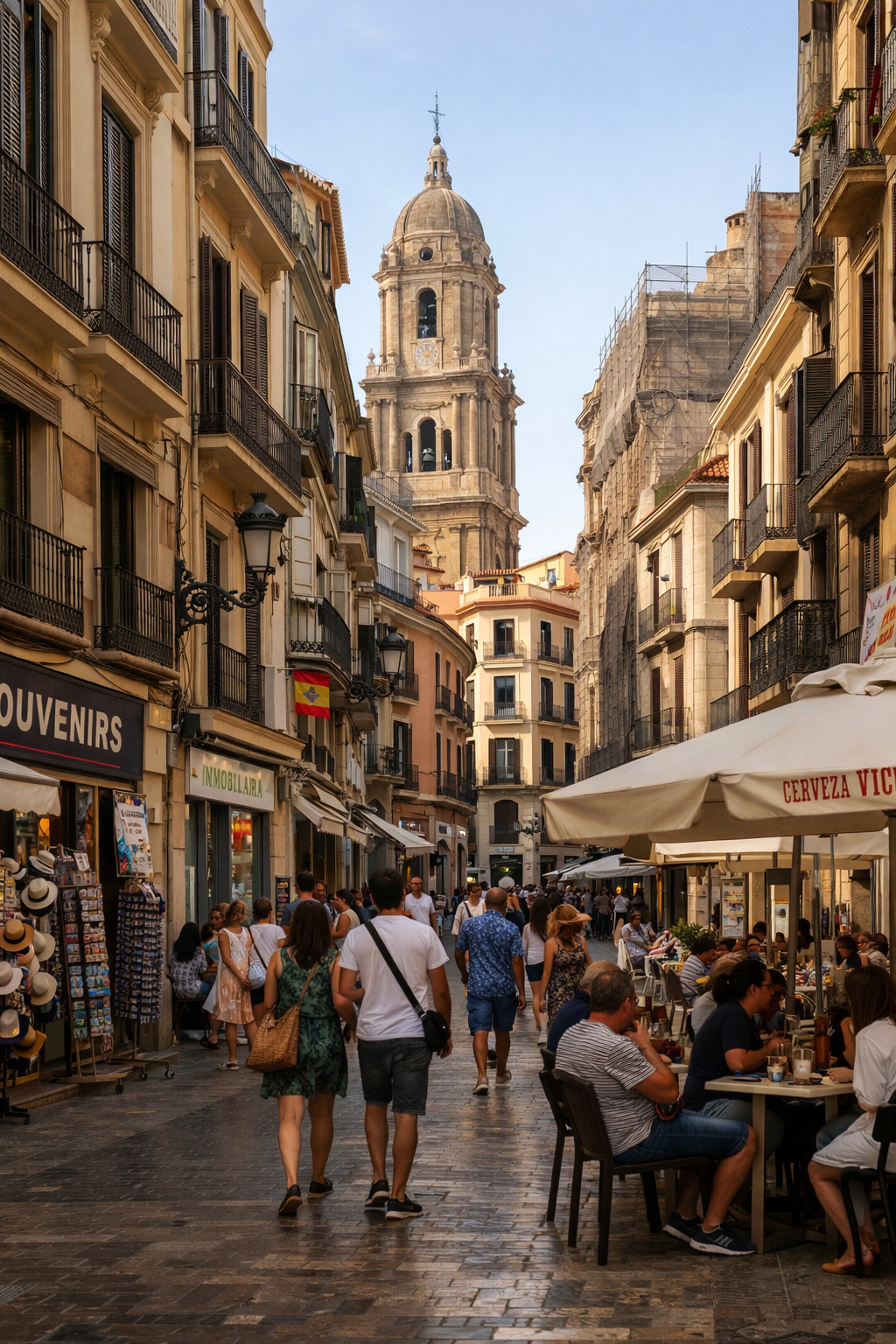


When Spain began withdrawing thousands of tourist rental licenses in 2025, the political message was clear: fewer short‑term rentals would free up more homes for long‑term tenants. But the outcome has been the opposite. According to Idealista, the number of long‑term rentals in Spain fell by 26,000 units despite the sweeping restrictions.
Nowhere is this contradiction more visible than in Málaga, where the debate around housing, tourism, and regulation has become one of the most heated on the Costa del Sol. Yet just 50 kilometers away, Marbella tells a completely different story — a market where the removal of tourist licenses barely moves the needle.
This article explores why the two cities are experiencing such different realities, and why targeting tourist rentals is a political shortcut rather than a structural solution.
Málaga: A booming city where tourist restrictions miss the real issue
Over the past decade, Málaga has transformed from a coastal provincial capital into one of Europe’s fastest‑rising tech and culture hubs. Google, Vodafone, Citigroup, and a growing startup ecosystem have attracted thousands of new residents — many with high purchasing power.
This creates three structural pressures:
- Demand is rising far faster than supply
Even if every tourist apartment in Málaga were converted into a long‑term rental, it wouldn’t come close to meeting the city’s population growth.
- Tourist apartments are not the homes locals need
Most tourist rentals in Málaga are concentrated in:
- Centro Histórico
- Soho
- La Malagueta
- Beach‑adjacent areas like Huelin
These are premium zones with rental prices already far beyond what the average local household can afford. Converting them to long‑term rentals does nothing to solve the shortage of affordable housing.
- Removing tourist licenses has triggered a massive shift to “seasonal rentals”
National data shows that seasonal rentals (1–11 months) increased by 58,000 units in 2025 — far more than the number of tourist rentals removed.
Málaga is one of the clearest examples of this trend.
Seasonal rentals offer:
- higher returns than long‑term leases
- lower legal risk
- no risk of tenants becoming “unremovable”
- strong demand from digital nomads, expats, and corporate workers
So instead of returning to the long‑term market, apartments simply change category.
Why Marbella isn’t affected in the same way
Marbella operates on a fundamentally different housing logic. It is not a traditional rental market — it is a luxury‑driven, internationally financed ecosystem.
- Marbella’s housing market is segmented — and tourist rentals sit in the luxury tier
Marbella effectively has three parallel markets:
- Luxury buyers (mostly international, often cash buyers)
- Premium short‑ and mid‑term rentals
- A small, separate local rental market
Tourist apartments in Marbella are overwhelmingly located in:
- Nueva Andalucía
- The Golden Mile
- Puerto Banús
- High‑end beachfront urbanisations
These properties would never enter the standard long‑term rental market, with or without a license.
- Property owners in Marbella have more options
Unlike Málaga, where many owners rely on rental income, Marbella’s owners often:
- have low or no mortgages
- can leave properties vacant
- can switch to high‑yield seasonal rentals
- can sell at a profit
This means regulation does not “force” them into long‑term leasing.
- Marbella already has a strong culture of mid‑term rentals
Golfers, remote workers, long‑stay winter visitors, and international professionals have shaped Marbella’s rental patterns for years. The shift from tourist license to seasonal rental is smooth and natural, not disruptive.
- The demographic and economic structure is different
Málaga has:
- more local workers
- more students
- more young families
- stronger pressure on affordable housing
Marbella has:
- higher average income
- more part‑time residents
- fewer households competing for the same type of housing
This means Marbella’s housing challenges are not caused by tourist rentals, but by land prices, luxury demand, and limited workforce housing.
The real drivers of the housing shortage — and why tourist rentals are a convenient scapegoat
The data is consistent across Spain: Removing tourist licenses does not increase the supply of long‑term rentals. In many regions — including Andalusia — it actually reduces it.
Three structural reasons explain this:
- Long‑term renting is too risky for many owners
Owners face:
- slow eviction processes
- strict rental regulations
- uncertainty about future laws
- limited ability to adjust rents
- Seasonal rentals are more profitable and safer
This is where most “lost” tourist apartments end up.
- New construction is not keeping pace with population growth
Málaga is one of Spain’s fastest‑growing cities. Marbella is also growing — but in a completely different segment.
Conclusion: Málaga needs structural reform — Marbella needs targeted segmentation
Targeting tourist rentals is politically easy, media‑friendly, and emotionally satisfying. But it does not address the root causes of Málaga’s housing crisis — and it barely affects Marbella at all.
Málaga needs:
- faster building approvals
- more affordable housing
- incentives for long‑term rentals
- stronger legal protections for landlords
Marbella needs:
- clearer segmentation between luxury and local housing
- more workforce housing for service and hospitality workers
- better infrastructure for seasonal residents
Tourist licenses are only the visible tip of the iceberg. Real solutions require understanding how different Costa del Sol municipalities function — and designing policies that match their unique economic and demographic realities.
For more information on buying property in Marbella and Costa del Sol, visit Nookhomes for expert guidance and listings that meet your criteria.
Let us help you find your dream home:
[hubspot type=”form” portal=”48181202″ id=”4d007081-be44-4b1a-8354-cb9ad7f1d0da”]